


GIGABYTE GeForce RTX 5060 WINDFORCE 8G Graphics Card (GV-N5060WF2-8GD) – 8GB GDDR7 128-bit, 28Gbps, 3840 CUDA, 2497MHz, PCIe 5.0, DP 2.1b x3 + HDMI 2.1b



Estimated delivery within UAE 1-2 working days
Delivery to other countries 3-5 working days

Special Offers

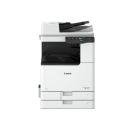
Canon imageRUNNER 2945i Office Black & White Copier up to 45ppm A3/A4 – 1 Unit, Comes With DADF, Duplex, Network Kit

Canon imageRUNNER ADVANCE DX C5840i Multifunctional Printer, White, 10.1 TFT LCD Control Panel, Up to 40ppm Print & Copy Speed, 600 x 600 Scan Resolution, Up to 1200 Sheets

Canon imageRUNNER 2425i,1GHz Dual Core Processor, 250 sheets Paper Tray, 25ppm Black and White Print Speed

Canon imageRUNNER C3326I 7-inch/17.8cm WVGA colour touchscreen 70ipm Scan speed,26ppm Print speed,2300 sheets Max paper capacity ADF + 2TRAY
-
GPU / CUDA: GeForce RTX 5060, 3840 CUDA cores
-
Core Clock: 2497 MHz
-
Memory: 8GB GDDR7, 128-bit, 28 Gbps
-
Outputs / Display: DisplayPort 2.1b x3 + HDMI 2.1b x1, Multi-view: 4, Max: 7680 × 4320
-
Power / Size: 8-pin x1, Recommended PSU: 550W, 199 × 116 × 40 mm
| Graphics Processing | GeForce RTX™ 5060 |
| Core Clock | 2497 MHz |
| CUDA® Cores | 3840 |
| Memory Clock | 28 Gbps |
| Memory Size | 8 GB |
| Memory Type | GDDR7 |
| Memory Bus | 128 bit |
| Card Bus | PCI-E 5.0 |
| Digital Max Resolution | 7680 x 4320 |
| Multi-view | 4 |
| Output | 3 x DisplayPort 2.1b 1 x HDMI 2.1b |
| DirectX | DirectX 12 API |
| OpenGL | 4.6 |
| Recommended PSU | 550 W |
| Power Connectors | 1 x 8-Pin |
| Card Size | L=199 mm W=116 mm H=40 mm |
| PCB Form | ATX |
| Accessories | Quick guide |
The GIGABYTE GeForce RTX™ 5060 WINDFORCE 8G (GV-N5060WF2-8GD) is built for users who want modern RTX features, efficient cooling, and a practical dual-fan form factor that fits cleanly into a wide range of PC builds. This model combines an NVIDIA GeForce RTX™ 5060 GPU with 8GB of high-speed GDDR7 memory on a 128-bit interface and a factory-rated 2497 MHz core clock, delivering a strong foundation for smooth gameplay, fast creation workflows, and accelerated GPU tasks when paired with a balanced CPU and platform.
At the core of this card is the GeForce RTX™ 5060 graphics processor paired with 3840 CUDA® cores. CUDA cores are a key part of how NVIDIA GPUs accelerate graphics workloads and GPU compute tasks, supporting modern game engines and creative applications that use GPU acceleration. For the end user, this means a GPU that is designed to handle modern titles and workloads more comfortably than entry-level options, while still targeting a build that values size efficiency, clean airflow, and stable thermals.
Memory is a major part of real-world GPU behavior, especially in newer games and creative workloads. This WINDFORCE model is integrated with 8GB of GDDR7 video memory, running at a 28 Gbps memory clock. GDDR7 is built for high throughput, and pairing that with a 128-bit memory bus helps the GPU feed data efficiently for high-resolution assets, textures, and frame buffers within the limits of the VRAM capacity. In practice, the way VRAM behaves depends heavily on your target resolution, texture settings, and the specific application, but this configuration is designed to provide a modern baseline for current software while taking advantage of GDDR7 bandwidth characteristics.
One of the most important value points of this particular model is its cooling and build design. GIGABYTE equips it with the WINDFORCE cooling system, and on this card it includes a set of engineering choices aimed at consistent thermal behavior under load. The card uses Hawk fans, a design that GIGABYTE describes as reducing air resistance and noise levels, while increasing air pressure and air volume compared to conventional designs. Beyond the fan shape, the airflow strategy includes alternate spinning to reduce turbulence between adjacent fans and help maintain more consistent airflow pressure across the heatsink. This matters because turbulence can reduce cooling efficiency and contribute to uneven hotspots during sustained loads.
Thermal interface quality also matters for long-term stability. GIGABYTE uses server-grade thermal conductive gel for cooling critical components such as VRAM and MOSFETs, aiming to provide good contact across uneven surfaces and maintain contact consistency through transport and long-term use. For the GPU itself, the cooling structure uses a copper plate that directly contacts the GPU, combined with composite copper heat pipes to transfer heat quickly into the heatsink for dissipation. In addition, the design includes screen cooling, where an extended heatsink layout allows airflow to pass through for improved heat dissipation. Together, these choices are intended to support stable thermals during gaming sessions and longer rendering or compute workloads.
Noise behavior is another practical concern. This model supports 3D Active Fan behavior, a semi-passive approach where the fans can remain off during low-load operation, reducing noise when the GPU is not under significant demand. The fans also use graphene nano lubricant, which GIGABYTE states can extend the life of sleeve bearing fans while remaining quieter. These details matter in real builds because many users are trying to balance temperature, performance, and acoustics without tuning fan curves aggressively.
From a connectivity perspective, the card is equipped with modern display outputs: three DisplayPort 2.1b ports and one HDMI 2.1b port, supporting a digital maximum resolution of 7680×4320 and up to four concurrent displays. This makes the card suitable not only for a primary gaming monitor but also for multi-monitor productivity setups, streaming layouts, or mixed-use environments where you want additional displays for chat, monitoring, timelines, or dashboards. The presence of multiple DisplayPort outputs is also helpful for high-refresh monitors that commonly use DisplayPort.
Platform compatibility is straightforward. The card uses a PCI-Express 5.0 interface and is designed for standard desktop systems (its PCB form is listed as ATX). Power delivery is handled through one 8-pin connector, with a 550W recommended PSU. In real-world terms, PSU selection should account for your total system configuration — CPU, cooling, storage, and the quality of the PSU itself — but the listed recommendation gives a baseline target for a properly configured system.
The RTX platform also includes NVIDIA features that many users specifically search for. This model is positioned under the NVIDIA Blackwell architecture and references DLSS 4 support. DLSS is a neural rendering feature set designed to improve performance and image quality through AI-assisted techniques, and the “DLSS 4” labeling indicates compatibility with NVIDIA’s newer DLSS generation features for supported titles and applications. The RTX platform also includes ray tracing capabilities and NVIDIA’s ecosystem focus on gaming responsiveness and creator tooling. For competitive and latency-sensitive play, NVIDIA highlights the Reflex technology stack, and for creators, the NVIDIA Studio ecosystem is designed around application optimization and driver support for common creative workflows.
Structurally, this card is built with durability-oriented design elements. It includes a reinforced structure and a reinforced backplate that is secured to the I/O bracket to provide improved structural integrity. This is particularly useful in real PC builds because modern GPUs can be physically heavier than older designs, and improved rigidity can help reduce long-term stress on the PCIe slot and mounting points. GIGABYTE also describes an “Ultra Durable” component approach and a “friendly PCB design” aimed at reducing sharp protrusions and improving handling during installation.
Software control is supported through GIGABYTE Control Center (GCC), which is positioned as a unified interface for supported GIGABYTE products, allowing adjustments such as clock speed, voltage, fan mode, and power target in real time. Users who prefer to keep tuning simple can run default behavior, while those who want more control can use GCC features for monitoring and adjustments, depending on system needs.
Finally, physical size is a key reason users choose this model. With a listed card size of L=199 mm, W=116 mm, H=40 mm, it fits into many mainstream cases more comfortably than oversized triple-fan designs, while still providing a cooling solution built around WINDFORCE airflow and thermal transfer techniques. For compact builds, airflow planning matters: ensuring front intake fans, a clear path to the GPU, and good exhaust routing will help the card operate as intended.
In summary, the GV-N5060WF2-8GD is a practical RTX™ 5060 option for users who want a modern NVIDIA feature set, 8GB GDDR7 memory at 28 Gbps, a 2497 MHz rated clock, and a cooling solution designed around structured airflow and consistent component contact. It’s a clean fit for gaming and creation builds that value stable thermals, modern display connectivity, and a compact footprint — without sacrificing the key hardware fundamentals that define an RTX gaming GPU in this class.

FSP Power Supply Hydro PTM Pro Platinum HPT2-850M STD0005 PPA8502204

FSP Power Supply Hydro PTM Pro Platinum HPT2-1200M STD0005-PPA12A1005

FSP Power Supply Hydro PTM Pro Platinum HPT2-1000M STD0005-PPA10A2805

FSP Power Supply Hydro PTM 750W HPT2-750M/PPA7505704

FSP Power Supply Hydro Gold Pro 750W HG2-750/PPA7505406

HP Pavilion Gaming 15 Backpack 400


Customer Reviews
No reviews yet. Be the first to review this product!